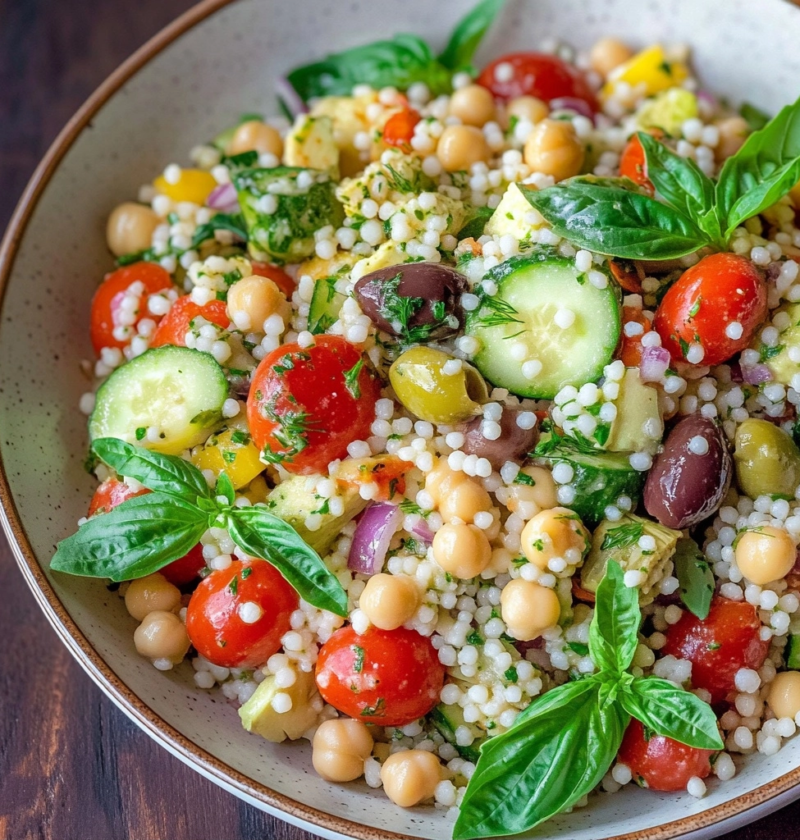
This Mediterranean Couscous Salad combines toasted grains with crisp vegetables for a refreshing summer meal. It offers brightness from lemon-dill dressing and satisfying texture from chickpeas and artichokes. You need this dish ready in under thirty minutes. It serves as a perfect side or hearty main course for busy weeknights.
| Detail | Information |
|---|---|
| Prep Time | 15 minutes |
| Cook Time | 10 minutes |
| Total Time | 25 minutes |
| Servings | 6 to 8 servings |
| Difficulty | Easy |
| Cuisine | Mediterranean |
| Category | Salads and Sides |
| Method | Stovetop and Bowl |
Why This Recipe Works
This Mediterranean Couscous Salad works because toasting the grains first creates a nutty depth that stands up to strong acidic dressings. I have found that boiling pearl couscous separately from the vegetables prevents the grains from becoming mushy or clumping together. The lemon-dill vinaigrette emulsifies quickly to coat every piece of pasta and vegetable without greasiness.
The combination of textures ensures that every bite remains interesting throughout the meal. You get the snap of fresh cucumber, the creaminess of artichoke hearts, and the firm chew of the couscous itself. This balance makes the dish feel substantial enough for adults yet light enough for children.
I also appreciate that you can adjust the protein content to suit your dietary needs easily. The chickpeas provide a significant amount of plant-based protein while the mozzarella adds extra calcium when added. This flexibility means the recipe works for various family preferences without requiring complex changes.
Finally, the ingredients last well in the refrigerator, making it an ideal option for meal prep or potluck events. The flavors actually improve as they meld together over time in the fridge. This characteristic saves time during the busy work week and ensures a reliable dinner staple.
This recipe relies on the balance of bright citrus and savory herbs to create a refreshing profile. It captures the essence of the Mediterranean coast without requiring travel or travel expenses.
Chef Tips for Perfect Results
You will achieve the best texture by toasting the couscous until it turns golden before adding water.
- Use extra virgin olive oil for the dressing: A high-quality oil will impart more fruity notes than a neutral vegetable oil.
- Drain canned ingredients thoroughly: Pat the chickpeas dry to prevent excess moisture from diluting the vinaigrette flavor.
- Chop vegetables uniformly: Cutting tomatoes and cucumbers into similar sizes ensures even distribution of dressing.
- Watch the toasting stage closely: Stir the couscous in hot oil constantly to avoid burning the small grains.
- Use boiling water for cooking: Adding boiling water immediately after toasting helps the grains absorb heat efficiently.
- Let the couscous cool completely: Warm grains will wilt the fresh basil and soften mozzarella too quickly.
- Whisk dressing vigorously: Emulsifying the oil and lemon juice ensures a smooth sauce rather than a separated mixture.
- Taste before serving: Add extra salt or pepper at the end since flavors mellow after chilling.
Common Mistakes to Avoid
Avoiding these common errors will save you from ending up with soggy or bland couscous salad.
| Mistake | Why It Happens | How to Fix It |
|---|---|---|
| Adding water to cold couscous | Colder grains absorb water slower and may cook unevenly. | Ensure water is boiling or use the heat of toasted grains. |
| Overcooking the pasta | Pearl couscous can become gummy if left in water too long. | Check package instructions and drain immediately once tender. |
| Under-seasoning the dressing | Vegetables dilute the salt levels in the sauce mixture. | Season the dressing heavily before tossing with vegetables. |
| Washing basil too early | Moisture on basil leaves causes premature rotting and wilting. | Add basil only right before serving or keep dry until mixing. |
| Skipping the toasting step | Untoasted grains lack the nutty aroma found in this dish. | Always sauté the dry couscous in oil first for flavor. |
| Serving while warm | Warm salad wilts fresh ingredients like tomatoes and cucumbers. | Cool grains thoroughly before mixing them into the bowl. |
Variations and Substitutions
You can easily swap certain ingredients to accommodate dietary restrictions or personal taste preferences.
| Ingredient or Element | Substitution or Variation | Impact on Flavor or Texture |
|---|---|---|
| Regular Couscous | Pearl Couscous or Orzo | Provides a chewier texture than small grain couscous. |
| Canned Chickpeas | Black Beans or Kidney Beans | Changes the earthy taste profile significantly. |
| Fresh Mozzarella | Goat Cheese or Feta | Creates a tangier saltiness and crumbly texture. |
| Kalamata Olives | Green Olives or Capers | Brings a sharper brine flavor instead of fruitiness. |
| Basil | Parsley or Mint | Mint makes the dish cooler while parsley keeps it savory. |
| Artichoke Hearts | Roasted Red Peppers | Adds sweetness and a softer mouthfeel to the salad. |
| Red Onion | Shallots or Chives | Reduces pungency while adding subtle aromatics. |
| Rosemary | Oregano (Dried) | Imparts a classic Mediterranean herbaceous backbone. |
Serving Suggestions and Pairings
Pair this salad with grilled proteins or serve as a standalone vegetarian option for a full meal.
- Grilled chicken breast seasoned with garlic powder and oregano.
- Roasted lamb chops or beef kebabs for a hearty main course.
- Simple flatbread or pita rolls to scoop up extra dressing.
- Grilled zucchini or eggplant slices for added vegetable volume.
- Chilled white wine or lemon infused sparkling water drinks.
- Greek yogurt dip with cucumber and mint as a cool side.
- Sliced watermelon or grapes for a light dessert finish.
- Crusty baguette bread toasted with olive oil and herbs.
- Vichyssoise or potato soup for a complete comfort meal.
- Roasted artichoke hearts seasoned with lemon juice as an extra side.
- Sautéed spinach with garlic butter for greens inclusion.
- Fresh figs sliced on top for a sweet summery accent.
This Mediterranean Couscous Salad serves as a versatile base for a complete dinner. You might choose to make it alongside grilled vegetables and crusty bread for a light evening.
Make Ahead Options
Yes, you can prepare most components of this recipe up to two days in advance without losing quality.
To make ahead properly, cook the couscous and cool it completely before storing it in an airtight container in the refrigerator. You can also chop the vegetables for the salad up to 24 hours before serving so they stay crisp. Keep the dressing separate until you mix everything just before serving to prevent wilting the greens.
If you need to prep further ahead, store the cooked grains and chopped vegetables separately in sealed containers. When you are ready to serve, combine them with the fresh dressing and stir gently to redistribute the moisture. This method protects the texture of the noodles and vegetables until the very moment you eat.
Storage and Reheating
Proper storage ensures the salad remains safe and delicious for several days after preparation.
| Method | Duration | Instructions |
|---|---|---|
| Room Temperature | 2 Hours | Do not leave out longer than 2 hours due to food safety risks. |
| Refrigerator | Up to 3 Days | Store in an airtight container to retain moisture and freshness. |
| Freezer | Not Recommended | Melting vegetables will ruin the texture upon thawing. |
| Reheating | N/A | Serve chilled as the dish is designed for cold consumption. |
| Make Ahead | 24 to 48 Hours | Keep dressing separate and add greens just before serving time. |
Nutritional Information
Approximate values are based on one serving and may vary depending on exact ingredients and portion size.
| Nutrient | Amount per Serving |
|---|---|
| Calories | 280 |
| Protein | 9 grams |
| Fat | 14 grams |
| Saturated Fat | 2 grams |
| Carbohydrates | 35 grams |
| Fiber | 5 grams |
| Sugar | 4 grams |
| Sodium | 450 milligrams |
Frequently Asked Questions
Can I substitute the couscous for another grain?
Yes, you can substitute pearl couscous with quinoa or farro for a different texture. Quinoa will provide a fluffier bite while farro offers a nutty chewiness. These alternatives require different cooking liquid ratios so check their package directions carefully.
How can I tell when the couscous is perfectly cooked?
You will know the couscous is ready when it has absorbed all the water and appears tender. It should maintain its shape without being mushy or hard in the center. Taste a grain to confirm the texture before draining it immediately.
What should I do if the salad tastes too bland?
Fix blandness by adding more lemon juice to brighten the acidity or salt to enhance the flavor. You can also toss in extra herbs like oregano or basil to boost the aroma immediately. Adding a pinch of red pepper flakes will introduce a nice kick as well.
Can this salad be made the night before dinner?
Yes, you can prepare the salad the night before to save time during the evening. Just ensure you refrigerate it promptly after it has cooled completely to avoid bacterial growth. Adding fresh cheese in the morning will keep it from getting soggy.
How should I serve this Mediterranean Couscous Salad at a party?
Serve this Mediterranean Couscous Salad in a large shallow bowl to make it easy for guests to access the food. Place the spooning spoon in the center and offer a stack of napkins nearby. It pairs best with toothpicks or small forks for easy sampling.
How long does the salad stay good in the fridge?
The salad stays good for three days when stored in an airtight container in the cold environment. After this time, the vegetables may lose their crunch and the grains could dry out. Discard the salad if you notice any off smells or strange textures.
Conclusion
This Mediterranean Couscous Salad is a simple yet impressive dish that brings summer flavors to any table. The toasted grains and fresh vegetables work perfectly together for a satisfying and healthy meal option. You will love the convenience of a dish that is both flavorful and easy to prepare. Enjoy every bite of this vibrant Mediterranean Couscous Salad.
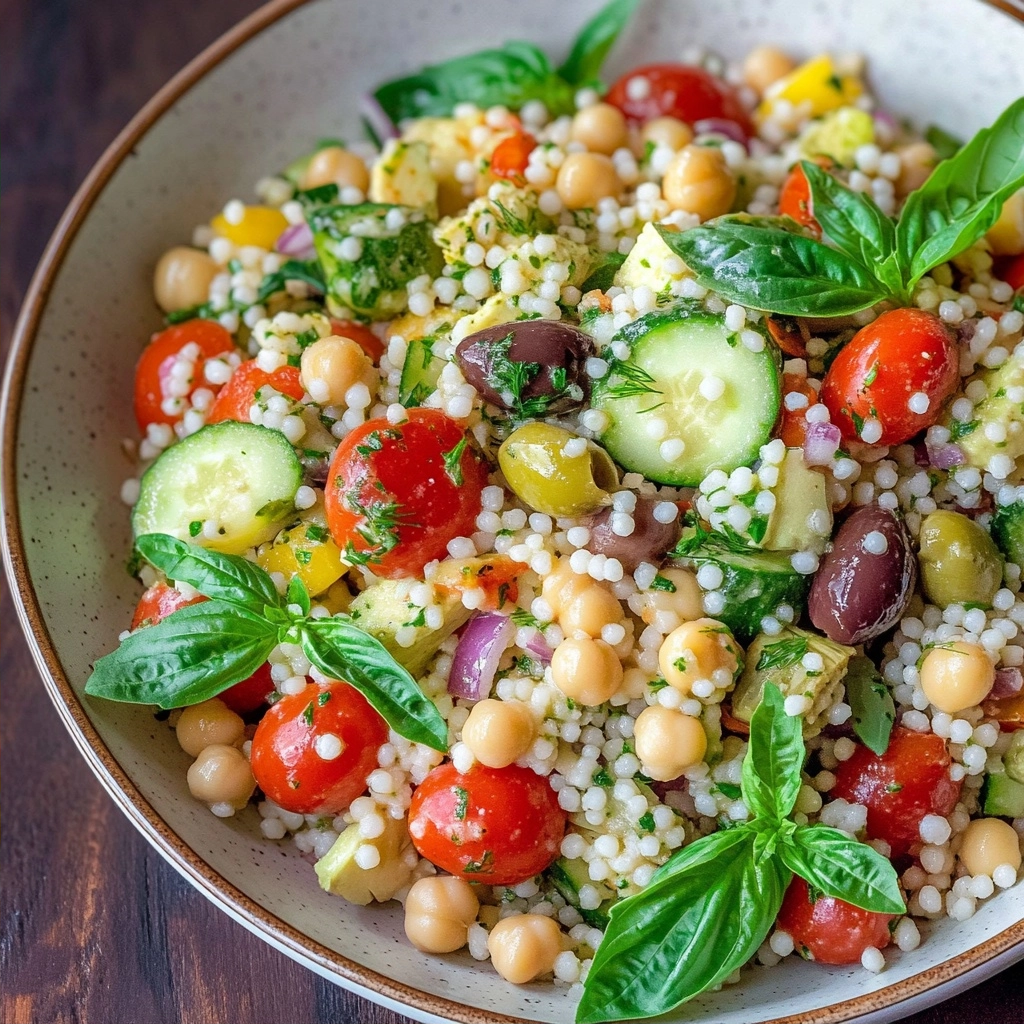
Mediterranean Couscous Salad for Fresh Summer Dinners
Ingredients
Method
- Heat a medium saucepan over medium heat. Add olive oil and couscous, toast for 2–3 minutes until golden.
- Pour in 2 cups water, bring to a boil. Reduce heat to low, cover, and simmer for 10 minutes or until water is absorbed. Fluff with a fork and let cool slightly.
- In a large salad bowl, combine couscous, chickpeas, cherry tomatoes, cucumber, artichoke hearts, and green onions.
- In a small bowl, whisk together lemon juice, red wine vinegar (if using), extra virgin olive oil, and salt and pepper. Stir in fresh dill.
- Pour the dressing over the salad and toss gently to combine. Serve immediately or refrigerate for at least 30 minutes to let flavors meld.
Nutrition
Notes
Substitute feta with crumbled vegan cheese or omit for a vegan version.
For a protein boost, add grilled grilled eggplant, bell peppers, or quinoa.