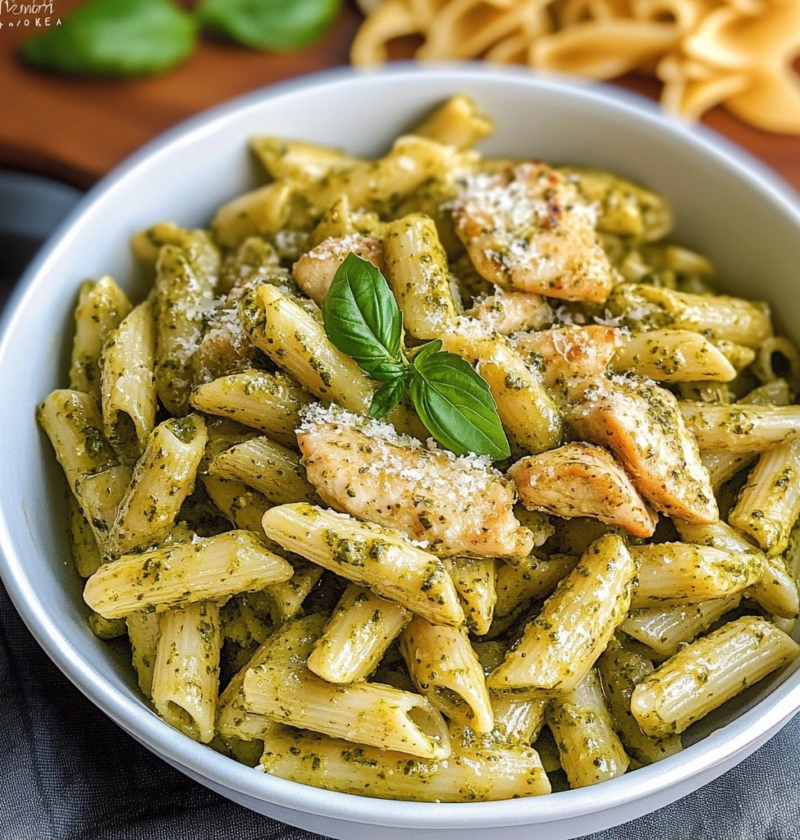
Chicken Pesto Pasta creates a creamy and flavorful weeknight dinner that comes together in a single skillet. This dish relies on fresh basil, savory cheese, and tender chicken pieces for a satisfying meal. The combination of rich pesto and half-and-half ensures a silky texture without the need for a heavy cream base. It provides a quick and comforting option for families who love Italian-inspired flavors.
| Detail | Information |
|---|---|
| Prep Time | 15 minutes |
| Cook Time | 20 minutes |
| Total Time | 35 minutes |
| Servings | 4 to 6 people |
| Difficulty | Easy |
| Cuisine | Italian-American |
| Category | Pasta and Chicken |
| Method | One-Pan Skillet |
Why This Recipe Works
This recipe succeeds because the flour coating on the chicken creates a perfect sear that thickens the sauce slightly later. The pasta water acts as an emulsifier to bind the pesto and dairy into a cohesive coating for every noodle. Fresh basil adds a bright aromatic lift that balances the richness of the heavy half-and-half and cheese. The one-pan method minimizes cleanup while maximizing flavor concentration through caramelized onion bits and browned chicken.
The balance of salt and acid in the pesto ensures the dish does not taste overwhelmingly heavy despite the cream. Using bite-sized chicken pieces allows for quick cooking that keeps the meat tender rather than dry. The garlic and Italian seasoning blend creates a savory aroma that fills the kitchen and signals comfort immediately. This structure allows home cooks to achieve restaurant-quality results with minimal effort during busy evenings.
Chef Tips for Perfect Results
Mastering the sauce texture requires attention to moisture levels and heat control throughout the cooking process.
- Reserve pasta water: Save at least one cup of the starchy water before draining to adjust sauce consistency later.
- Toast the flour: Tossing chicken in flour before frying helps create a light golden crust that adds body to the sauce.
- Do not burn garlic: Sauté minced garlic for only 30 seconds to keep it sweet and prevent a bitter aftertaste.
- Temper the dairy: Add half-and-half off the heat or at a low simmer to prevent curdling in the acidic pesto.
- Salt the chicken: Season the meat generously before browning to ensure deep flavor penetration rather than surface seasoning.
- Finish with cheese: Stir in Parmesan at the very end so it melts gently without becoming stringy or grainy.
- Check pasta texture: Undercook the pasta by one minute so it finishes cooking in the hot sauce for better absorption.
Common Mistakes to Avoid
Most failures occur when the cook ignores the sauce separation or overcoats the chicken with too much starch.
| Mistake | Why It Happens | How to Fix It |
|---|---|---|
| Sauce is too thin | Too much broth or insufficient reduction | Simmer uncovered to evaporate excess liquid until desired thickness. |
| Cheese separates | Heat was too high or dairy added too late | Add cheese off-heat and stir constantly to emulsify properly. |
| Chicken is dry | Overcooked during initial searing phase | Brown quickly over high heat and return to sauce before fully cooked. |
| Pasta is mushy | Overcooked before mixing with sauce | Boil for one minute less than package instructions say. |
| Garlic tastes burnt | Cooked in hot oil for too long | Add garlic after reducing heat to medium-low for 30 seconds max. |
| Dish is bland | Inadequate seasoning early on | Taste and adjust salt after adding the pesto and cheese. |
Variations and Substitutions
Customizing this dish allows you to adapt it to different dietary needs or flavor preferences easily.
| Ingredient or Element | Substitution or Variation | Impact on Flavor or Texture |
|---|---|---|
| Chicken Breast | Thighs | Thighs add more flavor and stay juicier during cooking. |
| Half-and-Half | Heavy Cream or Milk | Heavy cream makes it richer while milk makes it lighter. |
| Pesto | Store-bought or Homemade | Homemade offers fresher basil notes while store buys save time. |
| Parmesan | Pecorino Romano | Pecorino provides a sharper bite and more saltiness. |
| Pasta | Rotini or Penne | Short shapes hold the sauce better than long strands. |
| Vegetables | Sun-dried Tomatoes | Adds a chewy texture and sweet acidic punch. |
| Basil Garnish | Parsley or Cilantro | Changes the herbal profile slightly but adds visual contrast. |
| Chicken Broth | Vegetable Broth | Keeps the dish vegetarian-friendly without altering taste much. |
Serving Suggestions and Pairings
To elevate the meal, choose sides and drinks that complement the Italian herbs and creamy cheese.
- Serve with a crisp green salad dressed in lemon vinaigrette to cut the richness.
- Offer garlic bread on the side to soak up extra sauce from the plate.
- Include roasted asparagus for a green vegetable element that adds color.
- Suggest sparkling water with lemon to cleanse the palate between bites.
- Pair with a crisp Pinot Grigio although non-alcoholic options are preferred.
- Serve a light fruit dessert like watermelon to finish the meal refreshing.
A complete meal idea includes the pasta mixed with roasted cherry tomatoes and served with a side of parmesan toast and fresh arugula.
Make Ahead Options
You can prepare most components ahead of time, though the pasta should be cooked fresh before serving. The chicken and sauce can be made up to one day in advance and stored separately to prevent the noodles from absorbing all the liquid. Reheating is simple because the sauce maintains its emulsion well when gently warmed on the stove. If storing the full mixed dish, add a splash of water or broth to restore creaminess upon reheating.
Freezing is recommended only for the sauce and chicken without the pasta. Pasta becomes mushy when frozen and then reheated again due to starch retrogradation. Plan to cook fresh pasta only when you are ready to eat the warmed leftovers for the best texture.
Storage and Reheating
Proper storage preserves the freshness and safety of the leftovers for several days.
| Method | Duration | Instructions |
|---|---|---|
| Room Temperature | 2 hours max | Keep covered if short duration but refrigerate immediately after. |
| Refrigerator | 3 to 4 days | Use an airtight container to prevent absorption of fridge odors. |
| Freezer | 2 months | Store sauce and chicken only in freezer-safe bags without pasta. |
| Reheating | 5 to 10 minutes | Warm gently on the stove with a splash of water to loosen. |
| Make Ahead | 1 day | Cook components separately and combine just before serving for best texture. |
Nutritional Information
Approximate values are based on one serving and may vary depending on exact ingredients and portion size.
| Nutrient | Amount per Serving |
|---|---|
| Calories | 450 |
| Protein | 28 grams |
| Fat | 22 grams |
| Saturated Fat | 9 grams |
| Carbohydrates | 35 grams |
| Fiber | 2 grams |
| Sugar | 3 grams |
| Sodium | 680 milligrams |
Frequently Asked Questions
Can I substitute the chicken for tofu?
Yes, firm tofu pressed and cubed works well as a plant-based protein substitute. You should pan-sear the tofu until golden to mimic the texture of browned chicken. Marinate the tofu in soy sauce and Italian seasoning to improve the flavor profile significantly.
How do I know if the chicken is fully cooked?
Use an instant-read thermometer to check that the internal temperature reaches 165 degrees Fahrenheit. If you do not have a thermometer, cut into the thickest piece to ensure no pink remains inside. The juices should also run clear when pierced with a knife.
Why is my sauce separating?
Sauce often separates when heat is too high causing the fats to pool away from the dairy. Keep the heat low and simmer gently to encourage the ingredients to blend back together. Adding a splash of pasta water can help re-emulsify the fats and liquids.
Is this recipe suitable for make-ahead lunches?
Absolutely, this Chicken Pesto Pasta travels well for packed lunches on weekdays. Store the noodles and sauce together in the same container for easy reheating. Just ensure you add a little liquid when reheating to maintain moisture.
What pasta shape holds the sauce best?
Short shapes like penne, fusilli, or farfelle trap the creamy sauce in their crevices effectively. Long strands often slide off the spoon more easily than short tubes or twists. Choose based on personal preference but expect short pasta to deliver better flavor per bite.
Can I freeze the leftover pesto pasta?
You should freeze only the sauce and chicken separate from the cooked pasta. Pasta texture degrades in the freezer due to starch crystals forming during thawing. Reheat the frozen components and add fresh boiled pasta for a quality result.
Conclusion
This Chicken Pesto Pasta delivers a creamy and rich experience that satisfies any craving for Italian comfort food. The quick cooking method ensures the meal is ready in under 40 minutes for busy schedules. We recommend making this Chicken Pesto Pasta tonight for a guaranteed win at the dinner table. Enjoy the fresh herbs and savory cheese in every single forkful.
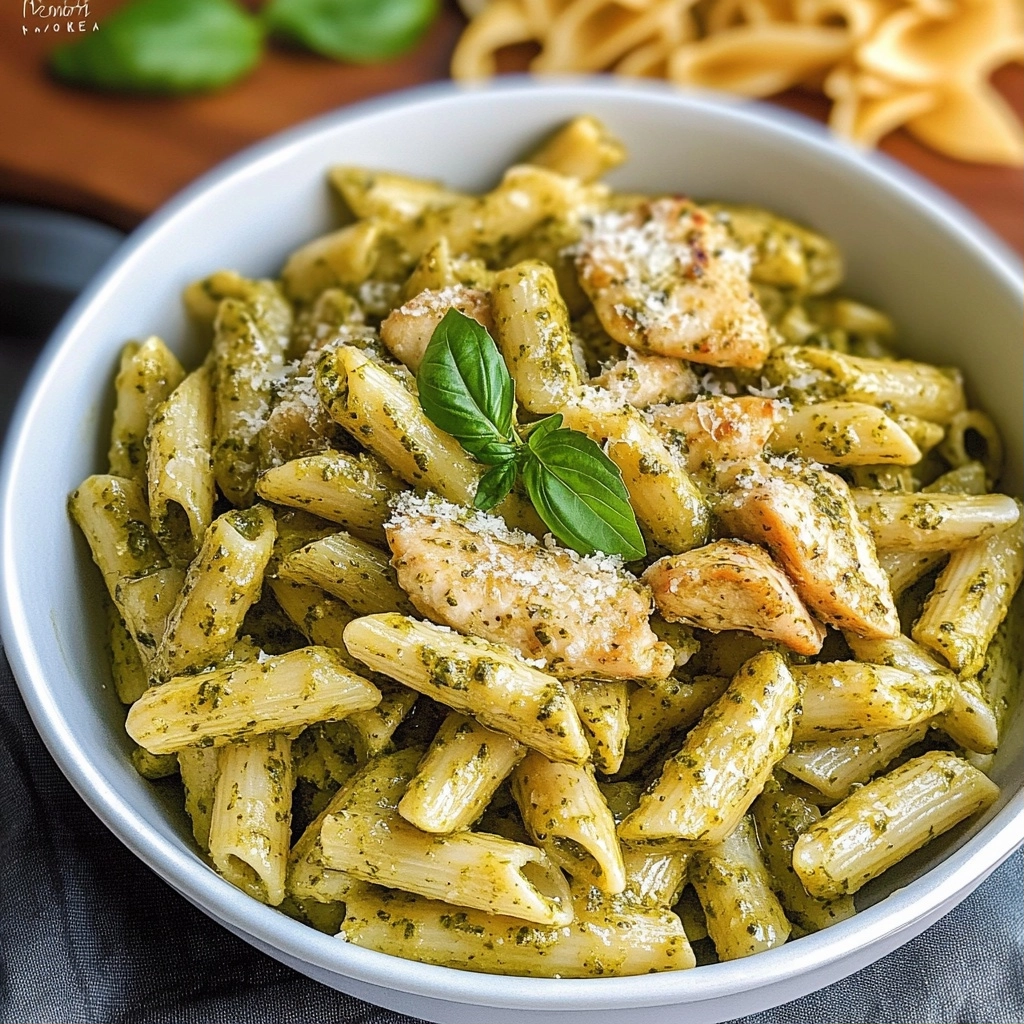
Chicken Pesto Pasta: Creamy One-Pan Skillet Dinner
Ingredients
Method
- Season chicken with salt, black pepper, and half the Italian seasoning
- Toss chicken in flour to coat
- Heat olive oil in a large skillet over medium-high heat
- Add chicken and sauté until golden (5–6 minutes)
- Add garlic and sauté 30 seconds
- Add 1/2 cup water, 1 tbsp butter (optional), and red pepper flakes, if using
- Bring to a simmer, then add pasta
- Cook pasta 8–10 minutes until tender
- Stir in pesto mixture and half-and-half off-heat
- Add grated Parmesan and reserved pasta water to thicken
- Finish with remaining Parmesan, basil, and a drizzle of olive oil
Nutrition
Notes
Toasting flour in pan adds depth
Add butter if pesto needs emulsification
Substitute nutritional yeast for a vegan option (replace Parmesan)