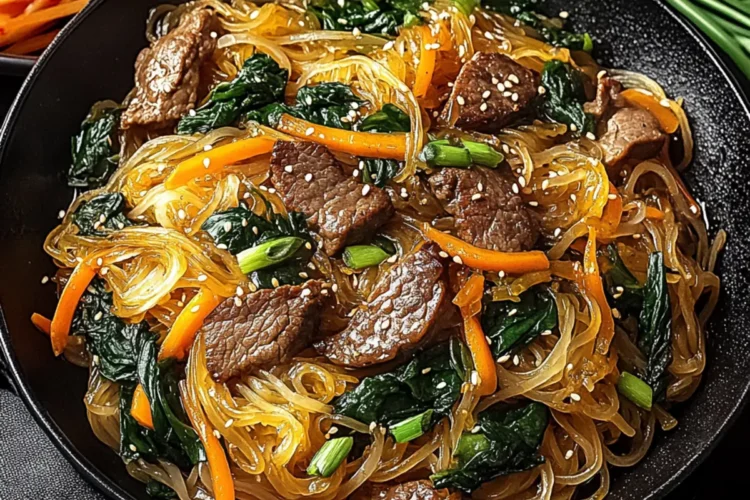
As I unraveled the vibrant strands of sweet potato noodles, the kitchen filled with a symphony of sizzling aromas that whisked me straight to the heart of Korea. This Korean Japchae Noodles Recipe isn’t just a dish; it’s an experience that wraps around you like a warm embrace after a long day. Each glossy bite delivers a perfect balance of savory soy-sesame goodness, tender protein, and a medley of fresh vegetables. It’s a weeknight-friendly option that comes together in just five simple steps, making it an ideal meal for both busy evenings and casual gatherings. Plus, you can easily customize it with your favorite proteins or even go meatless for a delightful vegetarian twist. Intrigued about how to whip up this comforting dish that everyone will crave? Let’s dive in!
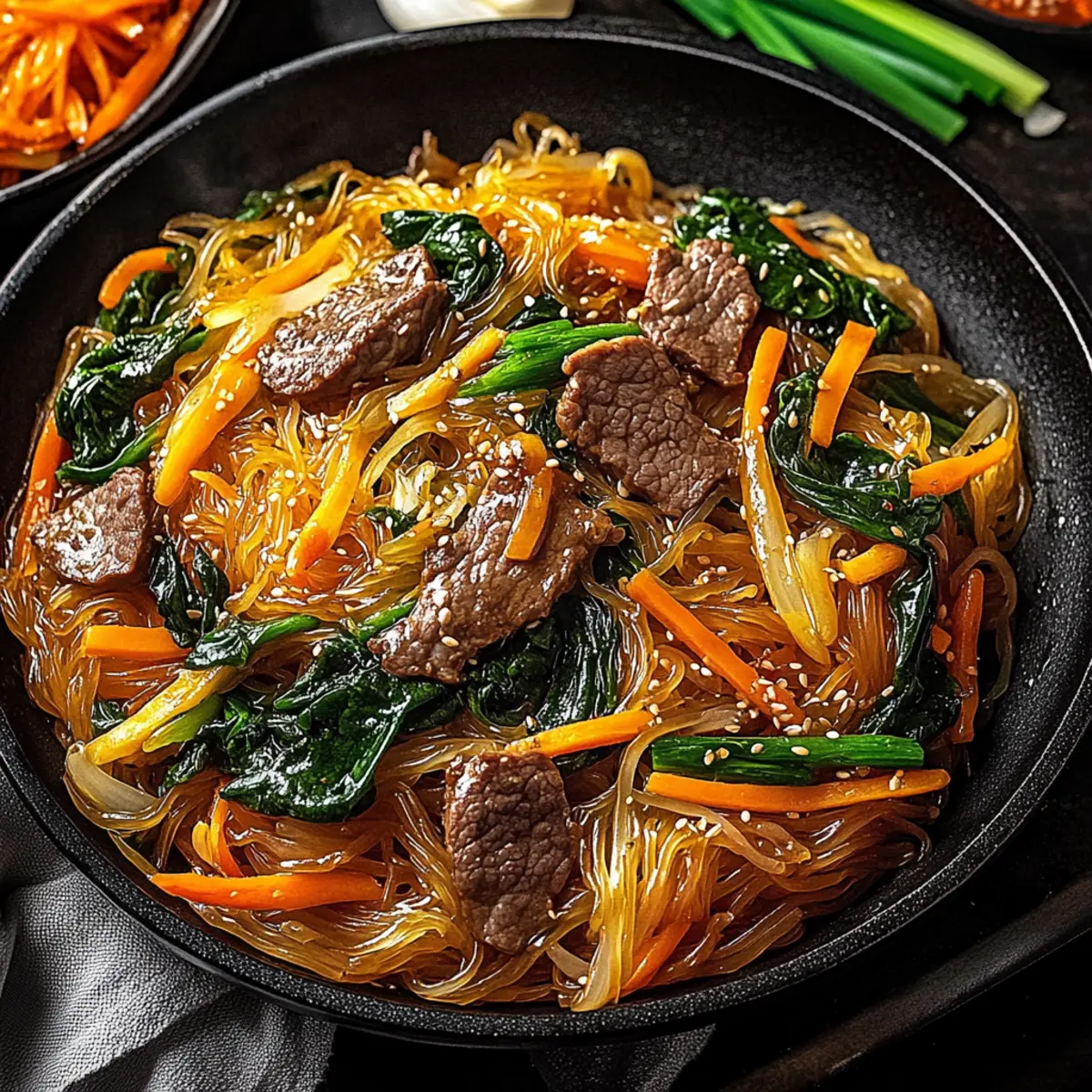
Why Try This Japchae Noodles Recipe?
Unforgettable Comfort: This authentic Korean Japchae Noodles recipe offers a warm embrace in every bite, perfect for cozy nights at home.
Quick & Easy: With just five steps, you can have this weeknight-friendly meal on the table in no time, making it a lifesaver for busy evenings.
Versatile Ingredients: Customize it to your liking! Whether you choose beef, chicken, tofu, or shrimp, there’s an option for everyone, just like in my delicious Baked Feta Eggs recipe.
Vibrant Flavors: The combination of savory soy-sesame sauce, fresh veggies, and sweet potato noodles creates a delightful bouquet of tastes that will impress even the pickiest of eaters.
Meal Prep Friendly: This dish is perfect for make-ahead meals, as it tastes even better the next day. Pair it with my Pinwheel Puff Pastry for a full course dinner!
Gluten-Free Option: Enjoy a worry-free meal with naturally gluten-free sweet potato noodles, making it suitable for those with dietary restrictions.
Korean Japchae Noodles Recipe Ingredients
Get ready to gather the essentials for this delightful dish!
For the Noodles
- Korean sweet potato noodles (glass noodles) – The star ingredient offering a chewy texture; ensure to soak them according to package instructions.
For the Protein
- Thin-sliced beef (or chicken, tofu, shrimp) – Adds richness and heartiness; feel free to swap based on your preference!
For the Vegetables
- Carrots (3 medium, julienned) – Provides crunch and natural sweetness; bell peppers or zucchini are great alternatives.
- White onion (1 large, thinly sliced) – Offers depth of flavor; shallots can be used if you prefer a milder taste.
- Green onions (1/2 bunch, chopped) – Adds brightness and is perfect for garnish; chives can substitute if needed.
- Spinach leaves (1/2 lb) – Brings nutrition and beautiful color; kale or Swiss chard works well as a substitute.
For the Sauce
- Soy sauce (6 tbsp) or tamari (for gluten-free) – Delivers umami flavor; adjust to your taste preference.
- Brown sugar (3 tbsp) – Balances the savory flavors with sweetness; honey can be used for a unique twist.
- Sesame oil (4 tbsp, divided) – Enhances the flavor and helps prevent sticking; feel free to adjust based on your taste.
For Cooking
- Garlic (6 cloves, minced) – Infuses every bite with aromatic goodness.
- Olive oil (1 tbsp) – Ideal for sautéing veggies; vegetable oil is a suitable alternative for cooking.
Embrace the joy of preparing this Korean Japchae Noodles Recipe and let the aromatic adventure unfold in your kitchen!
Step‑by‑Step Instructions for Korean Japchae Noodles Recipe
Step 1: Cook the Noodles
Begin by boiling a large pot of water. Once it reaches a rolling boil, add a splash of olive oil, then gently add the Korean sweet potato noodles. Cook for 5-6 minutes until they become tender yet chewy, stirring occasionally to prevent sticking. Once done, drain the noodles and set them aside, allowing any excess water to drip off.
Step 2: Sear the Protein
In a hot skillet over medium-high heat, add a small amount of sesame oil. Once heated, add the thin-sliced beef (or your choice of protein) and sear until it’s browned, approximately 3-4 minutes. Carefully season it with half of the soy sauce, sesame oil, and brown sugar, stirring well to coat. After cooking, transfer the beef to a plate and keep it warm.
Step 3: Sauté the Vegetables
In another skillets, pour in a tablespoon of olive oil and heat over medium. Add the julienned carrots and sliced onions to the skillet, sautéing for 4-5 minutes until they soften and become slightly translucent. Stir occasionally to ensure they cook evenly, allowing the vegetables to release their natural sweetness and tenderness.
Step 4: Enhance the Flavor
Stir in the remaining soy sauce, sesame oil, and brown sugar into the vegetable mixture. Add the minced garlic and chopped green onions, cooking everything together for another minute until fragrant. You’ll know it’s ready when the garlic turns golden and the onions are softened, filling the kitchen with an appetizing aroma.
Step 5: Combine and Wilt the Spinach
Mix in the spinach leaves, allowing them to wilt down, which should take about 2 minutes. The heat from the vegetables will help the spinach soften while keeping its vibrant green color. Once wilted, add the cooked sweet potato noodles and seared beef back to the skillet, tossing everything together to ensure thorough coating with the savory flavors.
Step 6: Serve and Garnish
Transfer the delicious Korean Japchae Noodles to a large serving bowl, making sure everything is well mixed. Garnish with extra chopped green onions or a sprinkle of sesame seeds for added flair. Serve warm, relishing in the comforting, aromatic dish that brings the heart of Korea to your table!
Make Ahead Options
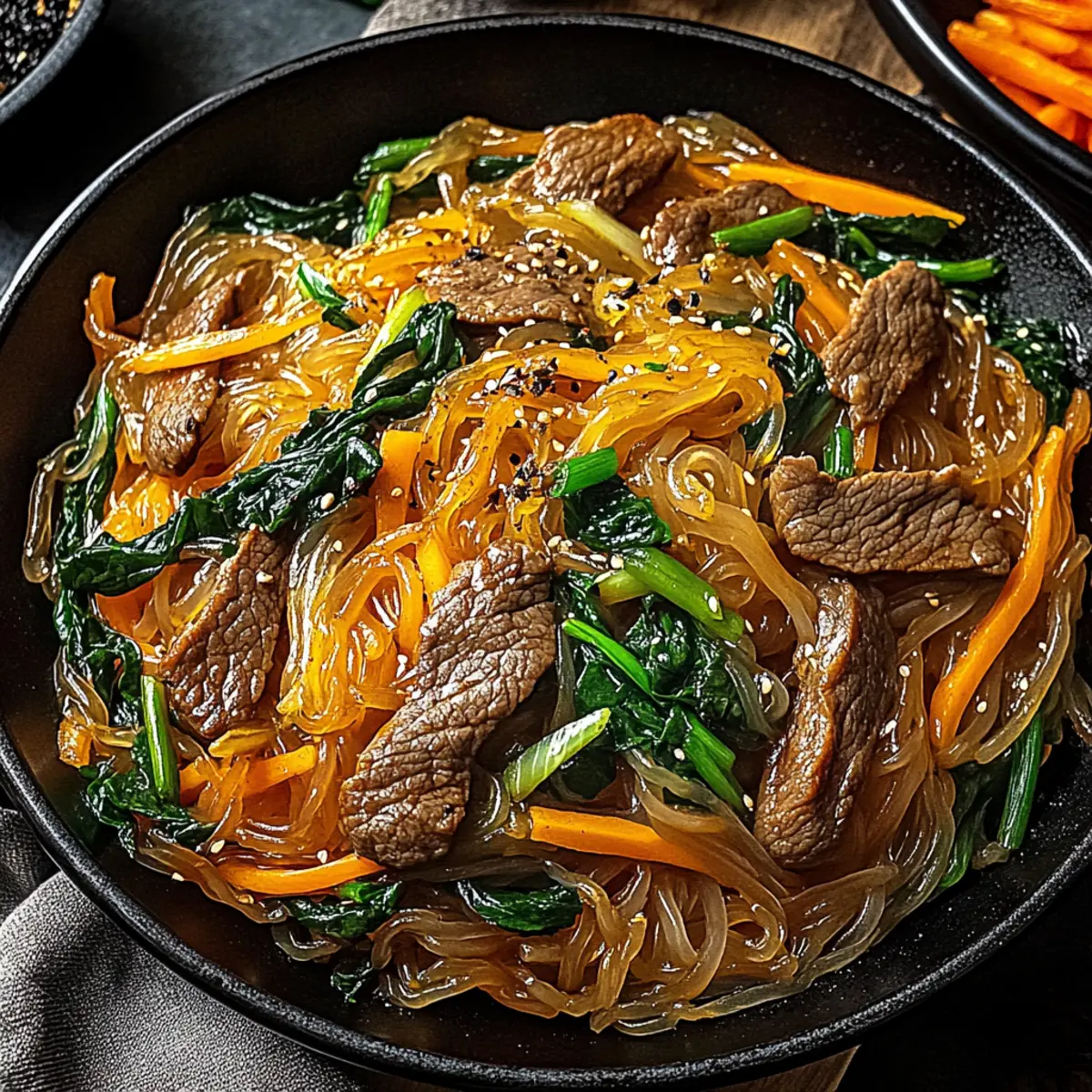
These Authentic Korean Japchae Noodles are perfect for meal prep enthusiasts! You can prepare the vegetables and cooked noodles up to 24 hours in advance, storing them separately in airtight containers in the refrigerator to maintain their texture and flavor. The sautéed beef (or your choice of protein) can be prepped the same way and kept for 3 days. When you’re ready to serve, simply reheat the noodles and veggies in a skillet over medium heat, adding a splash of soy sauce or sesame oil to revive the flavors. This way, you’ll enjoy delicious, restaurant-quality Korean Japchae Noodles with minimal effort, making busy weeknights much easier!
Korean Japchae Noodles Recipe Variations
Feel free to customize this delightful dish to suit your palate and dietary needs!
- Dairy-Free: Swap any chicken or beef with tofu, ensuring a creamier texture without dairy.
- Spicy Kick: Add gochujang or red pepper flakes for an extra punch of heat that balances beautifully with the sweet noodles.
- Vegetable Medley: Incorporate bell peppers, mushrooms, or baby corn for added color, crunch, and nutrition—perfect for those who love extra veggies!
- Gluten-Free Upgrade: Use tamari instead of soy sauce to keep this dish gluten-free while preserving its rich flavor.
- Rice Noodles: Can’t find sweet potato noodles? Rice noodles are an excellent substitute, offering a different yet delightful texture.
When creating your Japchae, let your imagination run wild! If you savor a heartwarming, hearty meal, consider pairing it with my scrumptious Baked Feta Eggs for a truly unforgettable dining experience.
- Crunch Factor: Add toasted sesame seeds or chopped nuts for a delightful crunch, enhancing both flavor and texture.
- Sweet Twist: Swap out brown sugar for honey or maple syrup for a subtle sweetness that rounds out the savory elements perfectly.
Explore these variations to elevate your Korean Japchae Noodles Recipe and make it truly your own!
What to Serve with Authentic Korean Japchae Noodles
Delight your senses and build a cozy meal around these vibrant and savory noodles that wrap you in warmth.
-
Korean Fried Chicken: The crispy, juicy flavors and spices of fried chicken complement the savory sweetness of Japchae beautifully.
-
Steamed Rice: Fluffy white rice acts as a canvas to soak up the soy-sesame sauce, making every bite satisfying and balanced.
-
Kimchi: This spicy, fermented dish adds a refreshing crunch and a zingy contrast that elevates the meal to new heights.
-
Asian-Style Salad: A light salad with sesame dressing offers vibrant freshness and balances the hearty noodles with a crunchy texture.
-
Vegetable Tempura: The crispy, lightly battered vegetables bring a delightful crunch that pairs wonderfully with the chewy noodles.
-
Sesame Ginger Cucumber Salad: The cool and refreshing cucumbers dressed in ginger and sesame oil create a lovely palate cleanser.
-
Mango Sticky Rice: Finish with a sweet treat; this creamy dessert adds a tropical twist that rounds out the meal effortlessly.
With these delightful pairings, your table will overflow with flavors and textures, making every meal a celebration!
How to Store and Freeze Korean Japchae Noodles
Fridge: Store leftovers in an airtight container in the fridge for up to 4–5 days. The flavors deepen, making them even more delightful on day two!
Freezer: For longer storage, freeze Korean Japchae Noodles in a single layer on a baking sheet, then transfer to a freezer-safe bag. They can last up to 2 months.
Reheating: When ready to enjoy, thaw overnight in the fridge, then reheat in a skillet over medium heat with a splash of soy sauce or sesame oil to revive the delicious flavors.
Wrap/Cover: Ensure noodles are well covered with plastic wrap or in an airtight container to prevent freezer burn and retain their amazing taste.
Expert Tips for Korean Japchae Noodles Recipe
-
Noodle Care: Add a touch of sesame oil if noodles clump together. This keeps them silky and ensures they soak up the flavors perfectly.
-
Prep Ahead: Chop your vegetables and cook noodles a day in advance, storing them separately. This shortcut maintains their freshness and texture.
-
Taste Adjustment: Feel free to modify the soy sauce according to your salt preference or swap it with tamari for a gluten-free Korean Japchae Noodles recipe.
-
Spice It Up: Want a kick? Add gochujang or red pepper flakes for a spicy twist, elevating your dish with an exciting flavor profile.
-
Leftover Magic: Reheat any leftovers in a skillet with a splash of soy sauce or sesame oil. This revives flavors, making it just as delicious as the first time!
Korean Japchae Noodles Recipe FAQs
What type of sweet potato noodles should I use?
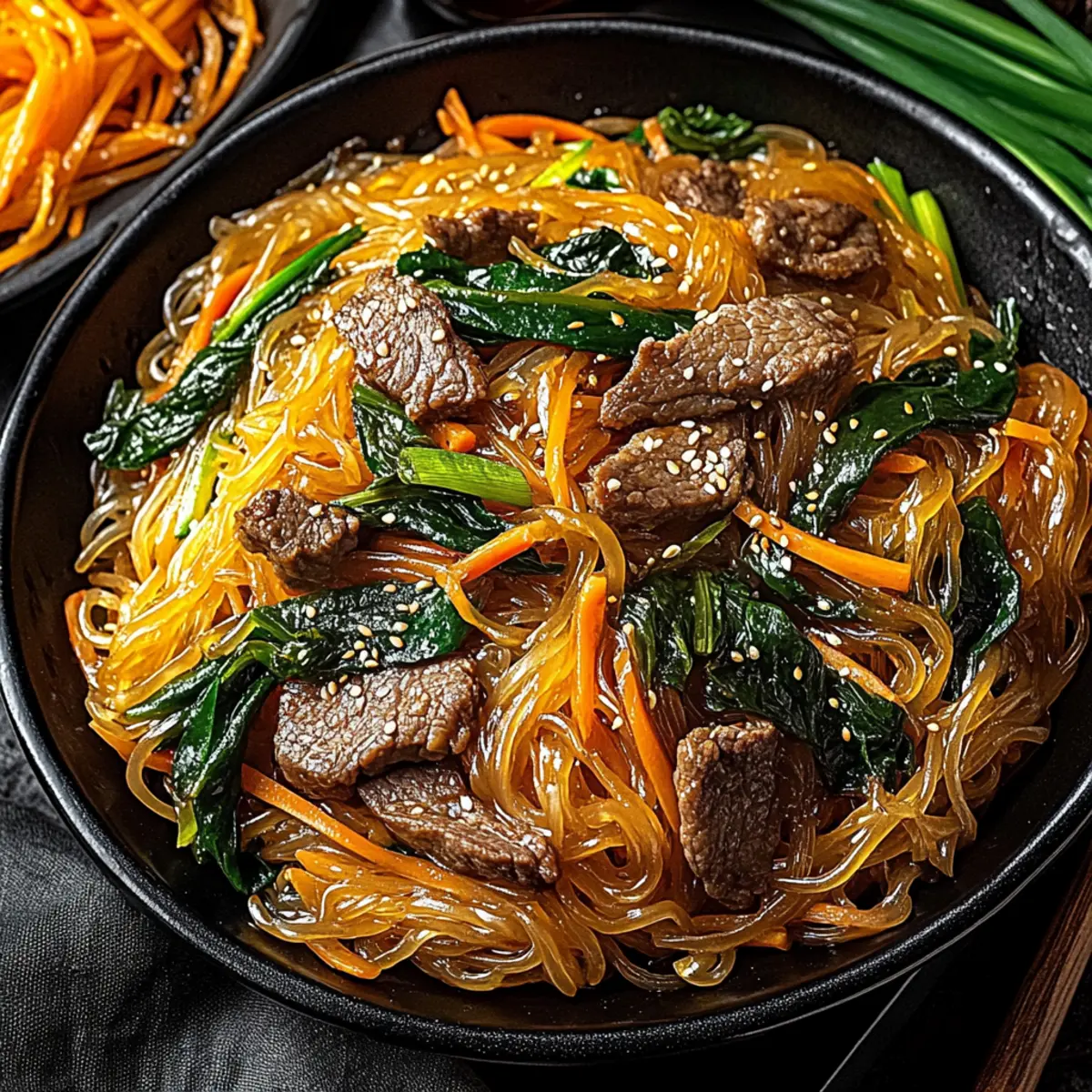
I recommend using Korean sweet potato noodles, also known as glass noodles. These noodles offer a unique chewy texture and are naturally gluten-free, making them a perfect option for many diets. When choosing, ensure they are labeled “sweet potato” to get the authentic flavor and texture!
How long can I store leftovers of the Japchae?
You can store your Korean Japchae Noodles in an airtight container in the refrigerator for up to 4–5 days. The flavors deepen over time, making for a tasty lunch or dinner the next day—just remember to reheat them gently to revive their deliciousness!
Can I freeze Korean Japchae Noodles?
Absolutely! To freeze, first lay the noodles out in a single layer on a baking sheet to prevent them from sticking together. Once they’ve slightly frozen, transfer them to a freezer-safe bag or container. They can be stored for up to 2 months. Just be sure to label it with the date so you know when you made it!
What should I do if the noodles clump together?
If you find your sweet potato noodles clumping, don’t worry! Simply add a small drizzle of sesame oil and toss them gently. The oil helps separate the noodles and enhances flavor, making them silky and enjoyable again.
Can I adjust this recipe to make it vegetarian?
Yes, indeed! This Korean Japchae Noodles Recipe is versatile. You can easily swap the protein for tofu or simply omit it altogether, focusing on the vibrant vegetables like mushrooms, bell peppers, or more spinach. This creates a delightful vegetarian twist perfect for meat-free nights!
How can I adjust the seasoning for dietary needs?
If you have sodium concerns or dietary restrictions, feel free to use low-sodium soy sauce or tamari for a gluten-free option. Adjust the amount based on your taste preference, adding more or less according to your family’s needs. Enjoy experimenting with flavors while keeping it healthy!
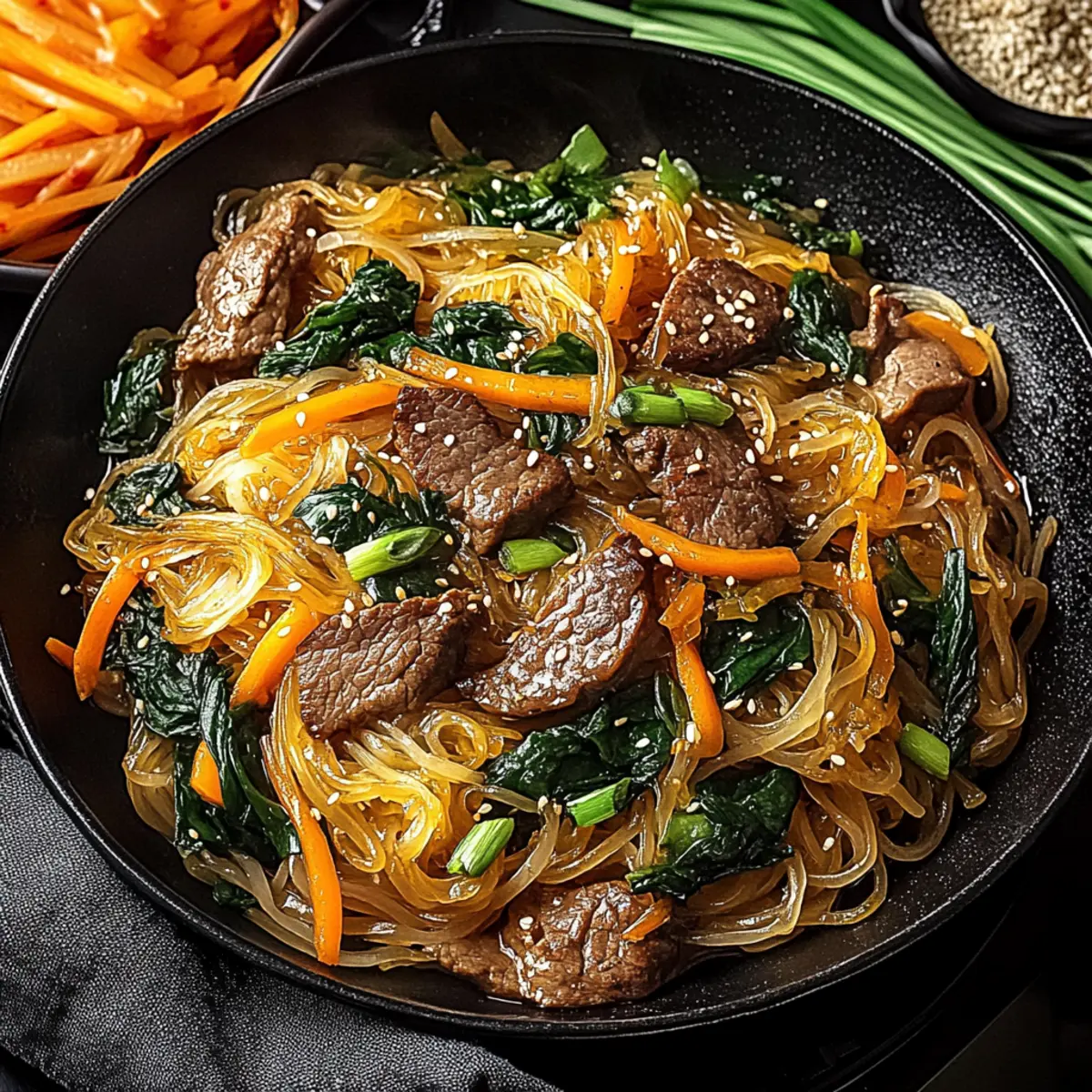
Delicious Korean Japchae Noodles Recipe for Cozy Nights
Ingredients
Equipment
Method
- Begin by boiling a large pot of water. Once it reaches a rolling boil, add a splash of olive oil, then gently add the Korean sweet potato noodles. Cook for 5-6 minutes until tender yet chewy, stirring occasionally. Drain and set aside.
- In a hot skillet over medium-high heat, add a small amount of sesame oil. Once heated, add the thin-sliced beef (or your choice of protein) and sear until browned, approximately 3-4 minutes. Season with half of the soy sauce, sesame oil, and brown sugar. Transfer to a plate and keep warm.
- In another skillet, pour in a tablespoon of olive oil and heat over medium. Add the julienned carrots and sliced onions, sautéing for 4-5 minutes until softened. Stir occasionally to cook evenly.
- Stir in the remaining soy sauce, sesame oil, and brown sugar into the vegetable mixture. Add minced garlic and chopped green onions, cooking for another minute until fragrant.
- Mix in the spinach leaves, allowing them to wilt down for about 2 minutes. Add the cooked sweet potato noodles and seared beef back to the skillet, tossing everything together to coat with the flavors.
- Transfer the Korean Japchae Noodles to a large serving bowl. Garnish with extra chopped green onions or sesame seeds. Serve warm.