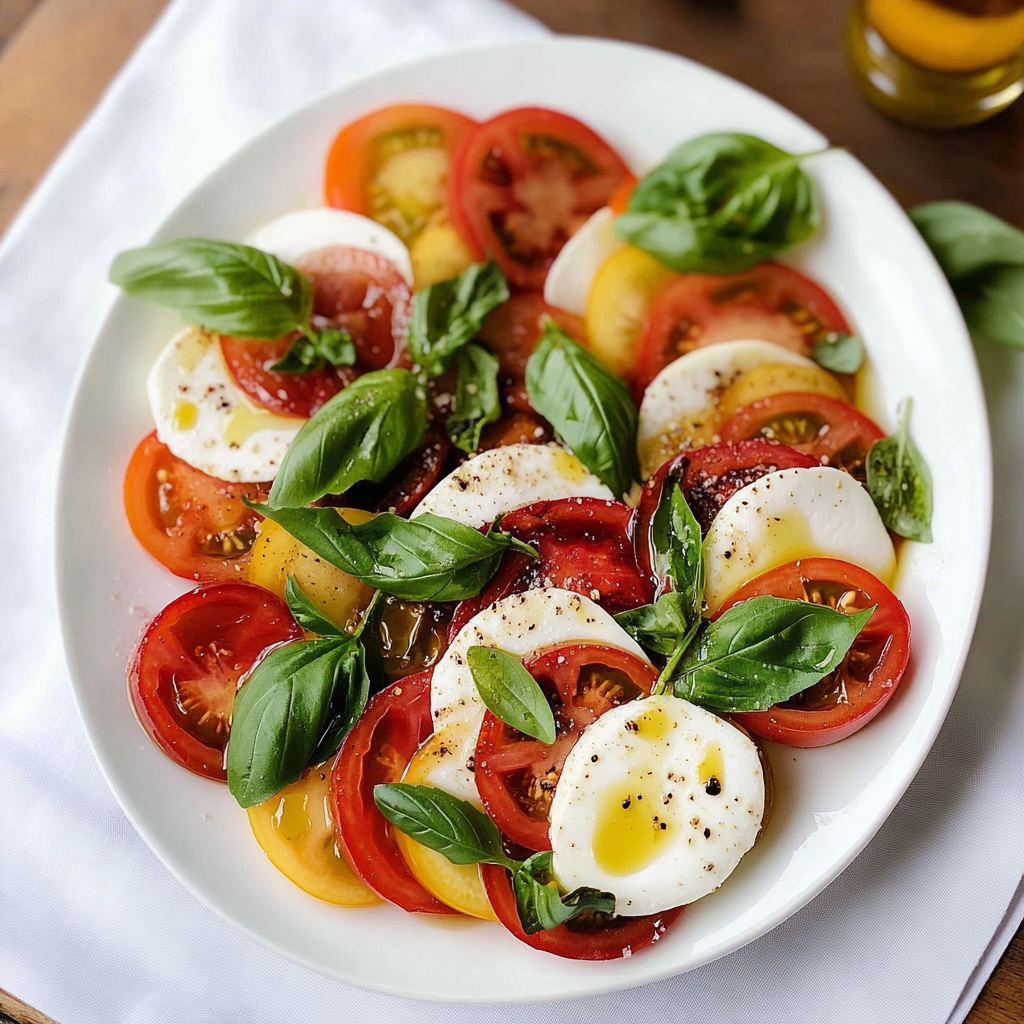
Creatating a Caprese Salad is the ultimate demonstration of quality ingredients creating a stunning dish. This Italian classic brings together ripe tomatoes, fresh mozzarella, and aromatic basil for an unforgettable culinary experience. The combination delivers a burst of freshness that highlights the peak of harvest season flavors in a simple, elegant way.
| Detail | Information |
|---|---|
| Prep Time | 15 minutes |
| Cook Time | 0 minutes |
| Total Time | 15 minutes |
| Servings | 4 servings |
| Difficulty | Easy |
| Cuisine | Italian |
| Category | Salad |
| Method | No Cook |
Why This Recipe Works
This recipe works because it removes unnecessary complexity and lets the ingredients shine on their own merit. I have found that the best flavors happen when the chef acts more as an arranger than a cook. The quality of every single component directly influences the final taste profile of this dish.
Slicing the tomatoes and cheese ensures that every bite delivers a perfect ratio of creamy texture and juicy brightness. By using heirloom varieties, you gain access to a spectrum of reds and golds that add visual interest alongside intense flavor depth. The simplicity allows for the natural sweetness of peak season produce to remain the primary focus of the dining experience.
Timing plays a crucial role in the success of this preparation since the ingredients must be ready at the moment of serving. You want to avoid any pre-slicing that might cause the cheese to dry out or the tomatoes to lose their structural integrity. Assembling just before eating preserves the texture and aroma that define the true essence of a fresh garden salad.
Chef Tips for Perfect Results
Focus on selecting high-quality produce to ensure the flavors are vibrant and the texture is delightful.
- Slice at room temperature: Cold ingredients often dull the aroma of basil and flatten the taste of tomatoes. Taking them out of the fridge thirty minutes before slicing creates a much better flavor profile.
- Cut for bite size: Use a sharp knife to create uniform slices that are easy to eat with a fork or toothpick. Consistency ensures every piece holds the same ratio of ingredients.
- Season generously: Do not be shy with the salt. A flaky sea salt enhances the natural sweetness of the tomatoes significantly better than standard table salt.
- Choose good oil: Extra-virgin olive oil acts as the binding agent for this dish. Look for a fruity variety that complements rather than overpowers the cheese.
- Preserve basil texture: Tearing or bruising the leaves releases more oils and aroma than cutting them with a knife. This technique prevents blackening from oxidation.
- Drain wet cheese: If using fresh mozzarella packed in liquid, pat it dry gently before slicing. Excess water can make the salad soggy and dilute the dressing.
- Layer thoughtfully: Overlapping the slices creates a visually appealing pattern while ensuring every forkful has both tomato and cheese.
- Finish right: Add the final drizzle of oil and a dusting of pepper immediately before serving for maximum impact and freshness.
Common Mistakes to Avoid
Avoiding common pitfalls ensures that your presentation remains beautiful and the taste remains sharp throughout the meal.
| Mistake | Why It Happens | How to Fix It |
|---|---|---|
| Using cold ingredients | Refrigerated cheese and fruit lack volatile aromatic compounds needed for flavor. | Let produce sit on the counter for at least thirty minutes before serving. |
| Overpowering flavors | Adding too many dressings masks the subtle taste of fresh produce. | Stick to simple olive oil, salt, and pepper to let ingredients speak. |
| Wet presentation | Moisture accumulates from the juices of the cheese and tomatoes. | Pat ingredients dry and serve on a large platter away from the plate edge. |
| Salted too early | Salting early draws out moisture which makes the salad look watery. | Add salt only at the very end of your assembly process for crispness. |
| Uneven slicing | Using a dull knife results in squished tomatoes and ragged edges. | Use a serrated bread knife for tomatoes and a wide flat blade for cheese. |
Variations and Substitutions
Variations can adapt the classic recipe to suit different dietary needs and flavor preferences without losing its charm.
| Ingredient or Element | Substitution or Variation | Impact on Flavor or Texture |
|---|---|---|
| Mozzarella | Fresh Buffalo Mozzarella | Provides a creamier texture and richer, milkier flavor. |
| Mozzarella | Low-Moisture Mozzarella | Offers a firmer texture but less creamy mouthfeel. |
| Tomatoes | Grapes or Cherry Tomatoes | Increases sweetness and creates a pop-like texture in the mouth. |
| Oil | Avocado Oil | Creates a nuttier flavor profile with high heat stability. |
| Oil | Infused Olive Oil | Adds herbal notes like rosemary or garlic to the dish. |
| Vegetables | Sliced Heirloom Peppers | Brings a crunchy texture and vibrant color to the arrangement. |
| Fruit | Strawberry Caps | Introduces a sweet summer element that pairs with the acidity. |
| Protein | Sliced Grilled Chicken | Transforms the salad into a main course for dinner. |
| Garnish | Cracked Black Pepper | Provides a spicy kick that balances the creamy cheese. |
Serving Suggestions and Pairings
Serving this salad correctly enhances the experience for guests and fits perfectly within seasonal meal planning.
- Pair with crusty baguette slices for dipping in the olive oil.
- Serve alongside a simple grilled chicken breast for a light dinner.
- Complement with a crisp white wine to cleanse the palate.
- Add a side of grilled vegetables for a more filling presentation.
- Include a glass of sparkling water with lemon for refreshment.
- Place on a large wooden board for an appetizer style presentation.
- Include a selection of cured meats if hosting a charcuterie spread.
- Pair with a roasted vegetable medley for seasonal balance.
- Top with fresh figs for a unique autumnal flavor combination.
- Serve as a side dish for a holiday feast buffet table.
- Accompany with a light bean soup for a healthy meal combo.
- Offer alongside bruschetta for a complete Italian appetizer set.
This dish shines as a standalone meal when accompanied by a small portion of pasta or a bowl of soup. The lightness of the salad prevents it from weighing down the stomach, allowing guests to enjoy the full spread. Its versatility makes it suitable for both a summer picnic and an elegant indoor dinner party event.
Make Ahead Options
You can prepare most components of the recipe ahead of time to save effort during service.
You can slice the tomatoes and arrange them on a serving platter up to two hours in advance. Keep the dish loosely covered with plastic wrap in the refrigerator until serving time. This ensures the tomatoes remain cool and firm while retaining their moisture content for the longest time possible.
Add the final touches of olive oil and basil just minutes before the meal begins. This technique prevents the basil from wilting and keeps the presentation vibrant for guests. Proper timing ensures the salad remains a highlight of the dining experience rather than a dull side dish.
Storage and Reheating
This salad is best enjoyed fresh but requires careful handling if left over from a gathering.
| Method | Duration | Instructions |
|---|---|---|
| Room Temperature | 1 hour | Leave uncovered on a cool counter to maintain freshness. |
| Refrigerator | 2 days | Store in an airtight container with a damp paper towel. |
| Freezer | Not Recommended | Vegetables will lose texture and flavor after freezing. |
| Reheating | Unnecessary | Do not heat or cook the salad before eating it cold. |
| Make Ahead | 24 hours | Prep ingredients but keep dressing separate until serving. |
While the flavors meld beautifully overnight, the texture of the cheese will inevitably soften. If you need to store the salad, place a layer of parchment paper over the top of the cheese to protect it from refrigerator air. Always bring the components back to room temperature before serving for the best taste results.
Nutritional Information
Approximate values are based on one serving and may vary depending on exact ingredients and portion size.
| Nutrient | Amount per Serving |
|---|---|
| Calories | 220 |
| Protein | 9 grams |
| Fat | 16 grams |
| Saturated Fat | 8 grams |
| Carbohydrates | 8 grams |
| Fiber | 2 grams |
| Sugar | 5 grams |
| Sodium | 350 milligrams |
These figures represent a balance of macronutrients suitable for a light meal or side dish. The high fat content comes from the olive oil and cheese, which are healthy dietary fats. Tomatoes provide essential vitamins while keeping the overall calorie count moderate for a satisfying portion.
Frequently Asked Questions
Can I use pre-sliced tomatoes instead of fresh ones?
No, pre-sliced tomatoes have often lost moisture and become mealy in texture. Always buy whole tomatoes to slice yourself for the juiciest and most flavorful results possible. Fresh slicing ensures you control the thickness and arrangement of each piece perfectly.
How do I know which tomatoes are ripe enough?
Look for deep, vibrant colors and a slight give when pressed gently near the stem. A ripe tomato should feel heavy for its size indicating high water content inside. Trust your nose, as a fruity, earthy scent indicates ripeness.
Can I make this salad gluten-free?
Yes, a Caprese Salad is naturally gluten-free if you avoid cross-contamination with grains. Using a certified wheat-free vinegar ensures no hidden gluten is present in the ingredients. Simply check labels on any added seasonings or dressings before adding them.
What is the best balsamic vinegar to use?
Older, aged balsamic vinegar has a thicker texture but can be expensive and overpowering. A younger, wine-based balsamic offers more acidity and a brighter flavor profile. Many chefs prefer a reduction for a concentrated syrup-like finish on the top.
Do I need to drain the mozzarella water?
Yes, draining the liquid helps prevent the salad from becoming watery and dilutes the flavors too quickly. Patting the cheese dry with a paper towel removes excess surface moisture immediately. This step is crucial for maintaining the structural integrity of the dish.
How long can I keep leftovers before eating?
Eat any leftovers immediately or within twenty-four hours for the best quality and safety. The texture degrades significantly after a full day in the refrigerator. Do not leave the dish at room temperature for more than an hour due to food safety guidelines regarding dairy.
Conclusion
Creating a Caprese Salad is a celebration of fresh ingredients prepared with minimal interference. The combination of tomatoes, cheese, and basil delivers a sensory experience that highlights the beauty of simple cooking. This dish will impress your guests with its visual appeal and robust flavor while remaining incredibly easy to prepare.
Perfect Caprese Salad Recipe for Fresh Summer Evenings
Ingredients
Method
- Bring ingredients to room temperature for 30 minutes
- Arrange tomato and mozzarella slices in a single layer on a large platter or individual plates
- Tuck basil leaves between the slices
- Drizzle olive oil over the top
- Garnish with sea salt
- Serve immediately, optionally with balsamic glaze drizzle
Nutrition
Notes
A sharp knife ensures clean, professional slices
Serve immediately to maintain texture and flavor
For a non-alcoholic glaze, ensure balsamic glaze is alcohol-free if desired